High Cholesterol: What the Numbers Actually Mean
Cholesterol isn’t all bad. You have “good” cholesterol (HDL) and “bad” cholesterol (LDL). High LDL quietly raises your risk of heart disease — and diet, movement, and sometimes medication can bring it down.
A cholesterol result can look confusing — several numbers, no symptoms. Here’s a plain-English guide to what they mean and what genuinely helps.
Good vs bad cholesterol
LDL is the “bad” one — too much can build up in arteries. HDL is the “good” one that helps clear it. Triglycerides are a blood fat that also matters. You generally want lower LDL and triglycerides, higher HDL.

Why it matters
High LDL usually has no symptoms but raises the long-term risk of heart attack and stroke. That’s why a blood test is the only way to know your numbers.
What actually lowers it
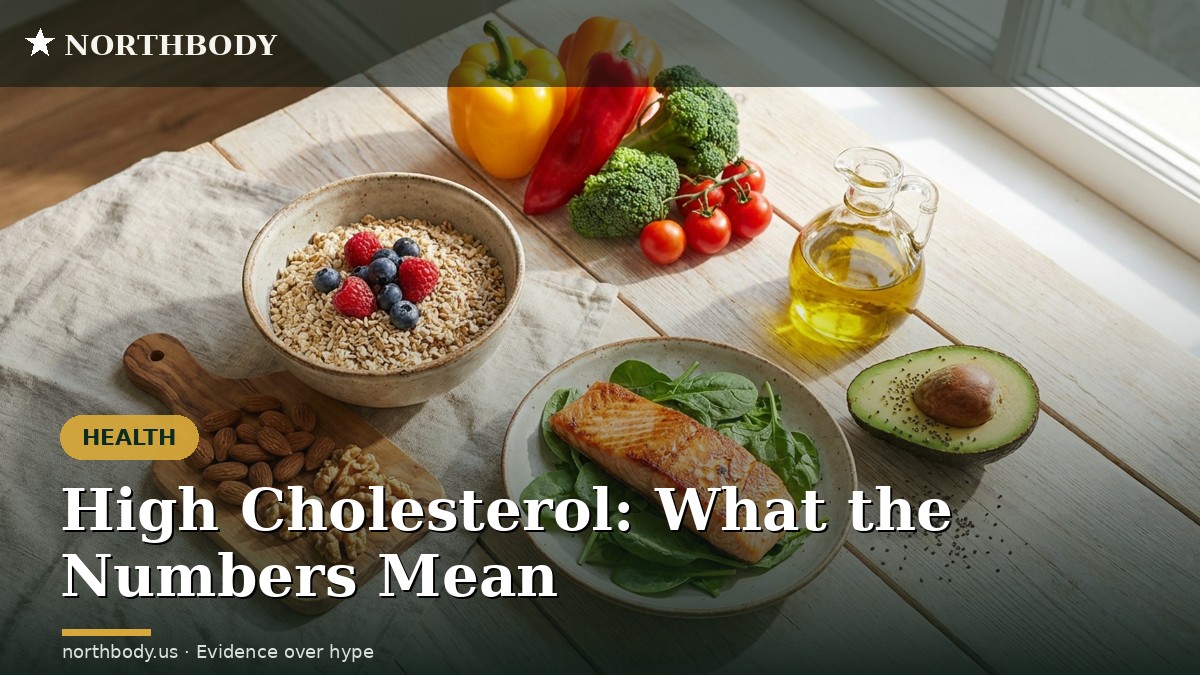
Helpful habits: less saturated and trans fat, more fiber (oats, beans), nuts and oily fish, more movement, and not smoking. Some people also need medication like statins — which is common and effective.
Numbers and habits that help
- Know your LDL, HDL and triglycerides
- More fiber (oats, beans), nuts and oily fish
- Less saturated/trans fat and ultra-processed food
- Move regularly, don’t smoke
- Take prescribed medication if your doctor advises
The bottom line
Cholesterol is about balance, not just “high = bad.” Know your numbers, lean on fiber, healthy fats and movement, and follow your doctor’s advice on medication if needed. It’s one of the most manageable heart risks.
Sources
- American Heart Association — cholesterol.
- Mayo Clinic — HDL, LDL and triglycerides.
- NIH — managing cholesterol.