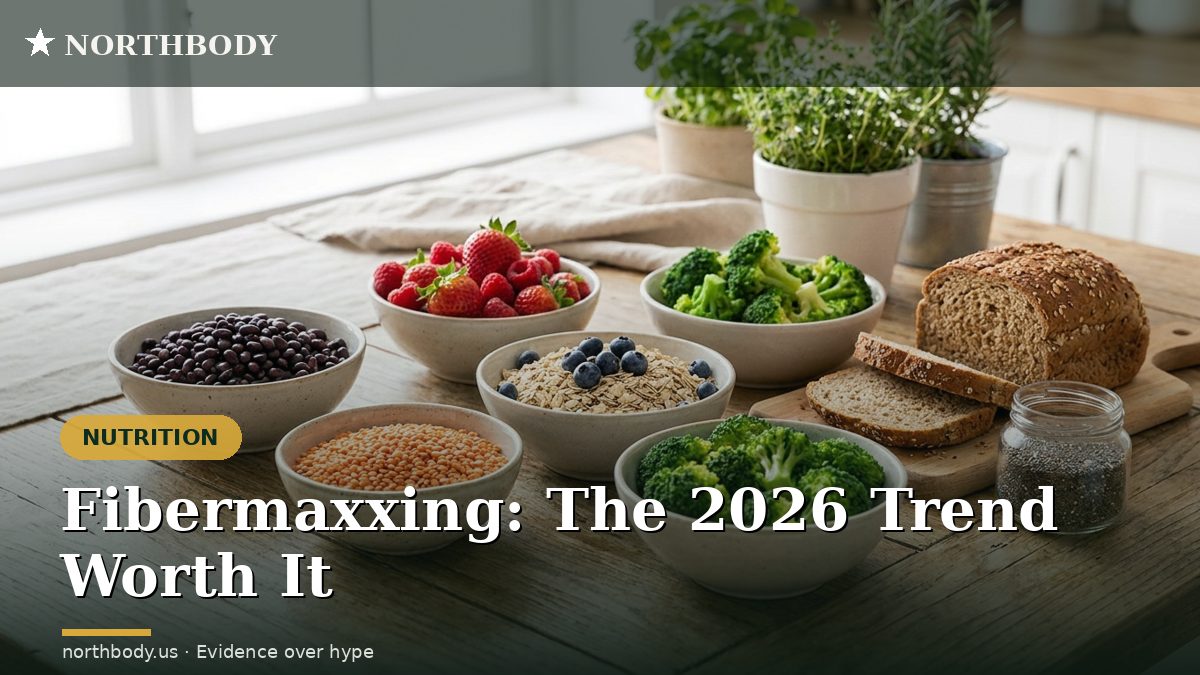
Fibermaxxing: the 2026 trend that's actually worth the hype
After years of "protein everything," the internet has finally fixed its attention on the nutrient most people genuinely lack. For once, the dietitians agree with the trend.
"Fibermaxxing" — deliberately packing more fiber into every meal — is one of the biggest nutrition movements of 2026. And unlike many food trends, this one points people toward something they actually need: roughly 95% of people don't get enough fiber.
How much fiber do you actually need?
The targets
- General guidance: about 25 g/day for women, 38 g/day for men.
- "Fibermaxxing" pushes higher — often 30–40 g/day or more.
- The real gap: most people eat only ~15 g — so the win is closing that gap, not hitting a record.
Why fiber is worth the attention
Fiber quietly supports a lot: it feeds the gut bacteria linked to immunity and metabolism, helps steady blood sugar, lowers cholesterol, and keeps you full so you naturally eat less. Higher-fiber diets are also linked to lower risk of heart disease and colon cancer — the latter being especially relevant as colon cancer rises in younger adults.
How to fibermaxx the smart way
The goal is real food, not a tub of fiber powder:
- Beans, lentils and chickpeas — among the highest-fiber foods there are.
- Whole grains — oats, brown rice, whole-grain bread over refined versions.
- Fruit with the skin on — apples, pears, berries.
- Vegetables, nuts and seeds — chia and flax are easy add-ons.
The honest take
Fibermaxxing is really just "eat more whole plants" with a catchy name — but that's exactly why it's a good trend. It nudges people toward the one change most of us genuinely need. Aim to close the gap toward 30 g a day, go slow, and your gut, heart and appetite will all thank you. Pair it with enough protein and you've covered the two things that matter most on a plate.
Sources
- U.S. News & World Report — Top Health & Nutrition Trends for 2026.
- Dietary Guidelines for Americans — fiber recommendations.