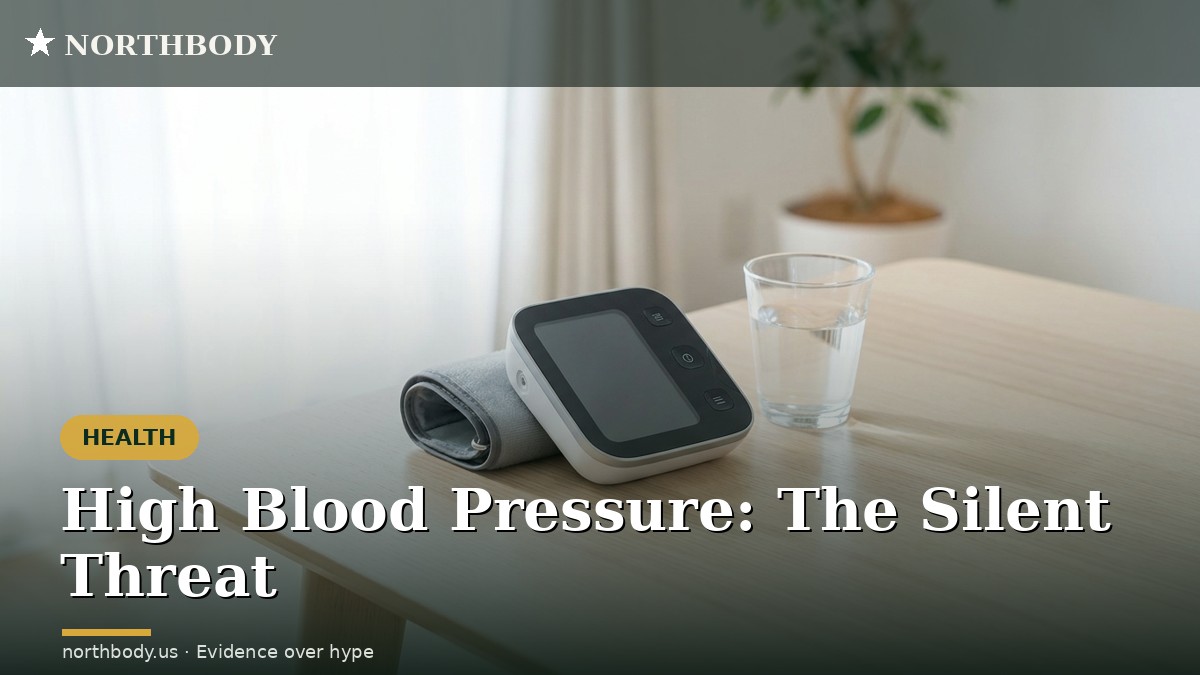
High Blood Pressure: The Silent Problem Half of Adults Have
High blood pressure (hypertension) is when the force of blood against your artery walls stays too high over time. It’s extremely common, usually has no symptoms, and quietly raises the risk of heart attack, stroke and kidney problems — which is why it’s called the “silent” condition.
Because it rarely makes you feel unwell, high blood pressure is easy to ignore. But it’s one of the most important numbers to know — and one of the most responsive to lifestyle changes.
Why it’s “silent”
Most people with high blood pressure feel completely normal. There’s usually no warning sign until it has already strained the heart and blood vessels. The only way to know is to measure it.
What pushes it up
Common contributors include too much salt, carrying extra weight, inactivity, heavy alcohol, ongoing stress and poor sleep — plus genetics and age, which you can’t control.
What actually helps
Lifestyle changes can meaningfully lower blood pressure: less salt and ultra-processed food, more movement, losing a little weight if needed, limiting alcohol, better sleep, and managing stress. Many people also need medication — and that’s normal and effective.
Lifestyle moves that lower it
- Know your numbers — get it checked regularly
- Cut back on salt and ultra-processed foods
- Move most days — walking counts
- Limit alcohol, improve sleep, manage stress
- Take prescribed medication exactly as directed
The bottom line
High blood pressure is dangerous precisely because it’s quiet. The fix starts with knowing your numbers — then steady lifestyle changes and, when needed, medication. It’s one of the most manageable risks once you’re paying attention.
Sources
- American Heart Association — high blood pressure.
- CDC — high blood pressure facts.
- Mayo Clinic — hypertension and lifestyle.