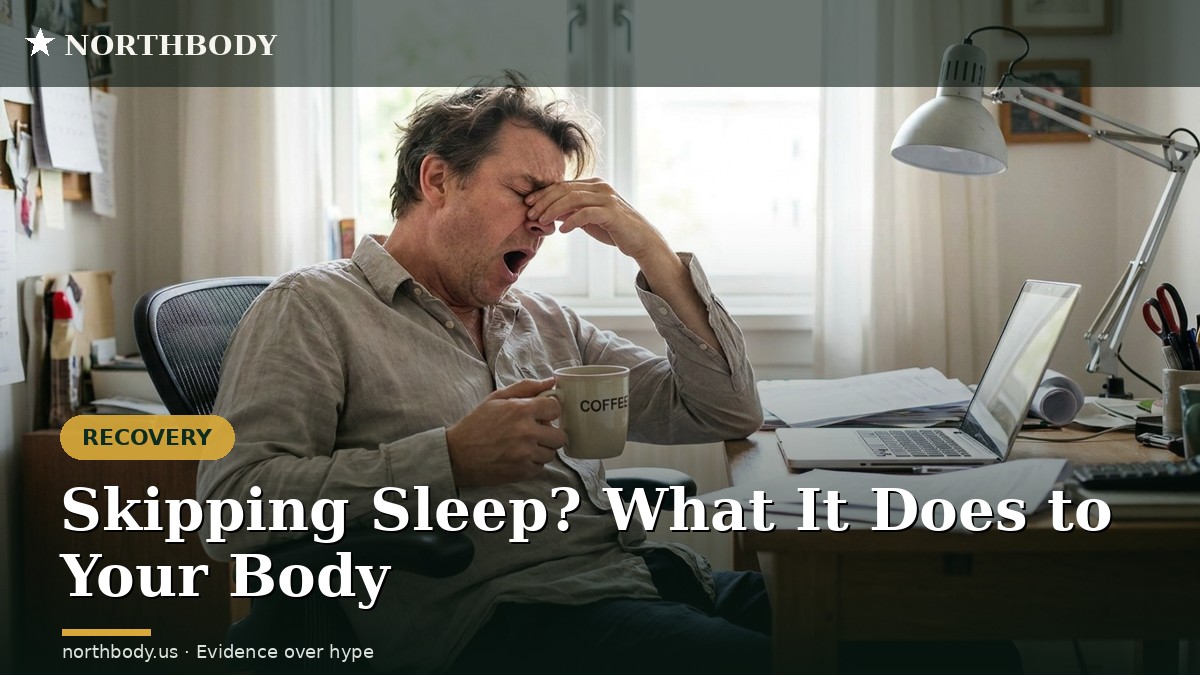
Skipping Sleep? Here’s What It Does to Your Body
Regularly missing sleep does far more than make you tired. It affects your focus, mood, appetite, immune system and long-term health — raising the risk of weight gain, heart problems and more. Sleep isn’t a luxury you can keep skipping.
We tend to treat sleep as the thing we cut when life gets busy. But sleep is when your body and brain repair themselves — and going short, night after night, quietly adds up.
What happens short-term
Even a few bad nights hit your focus, memory, reaction time and mood, and increase cravings for sugary, high-calorie food. You’re more irritable, less sharp, and hungrier.

The long-term risks
Chronic short sleep is linked to weight gain, high blood pressure, heart problems, higher blood sugar and a weaker immune system. It’s a genuine health risk, not just an inconvenience.
How much you actually need
Most adults need 7–9 hours. Quality matters too — consistent timing, a dark cool room, and no late screens or caffeine make those hours count.
Protect your sleep
- Aim for 7–9 hours, consistently
- Same sleep & wake time daily
- Dark, cool, quiet bedroom
- No late caffeine or screens in bed
- Treat sleep like diet and exercise — a priority
The bottom line
Sleep is one of the three pillars of health, alongside food and movement — and the one people sacrifice first. Protect your 7–9 hours, and your body, mind and mood all work better. It’s the cheapest health upgrade there is.
Sources
- CDC — sleep and chronic disease.
- NIH — sleep deprivation effects.
- Sleep Foundation — how much sleep you need.