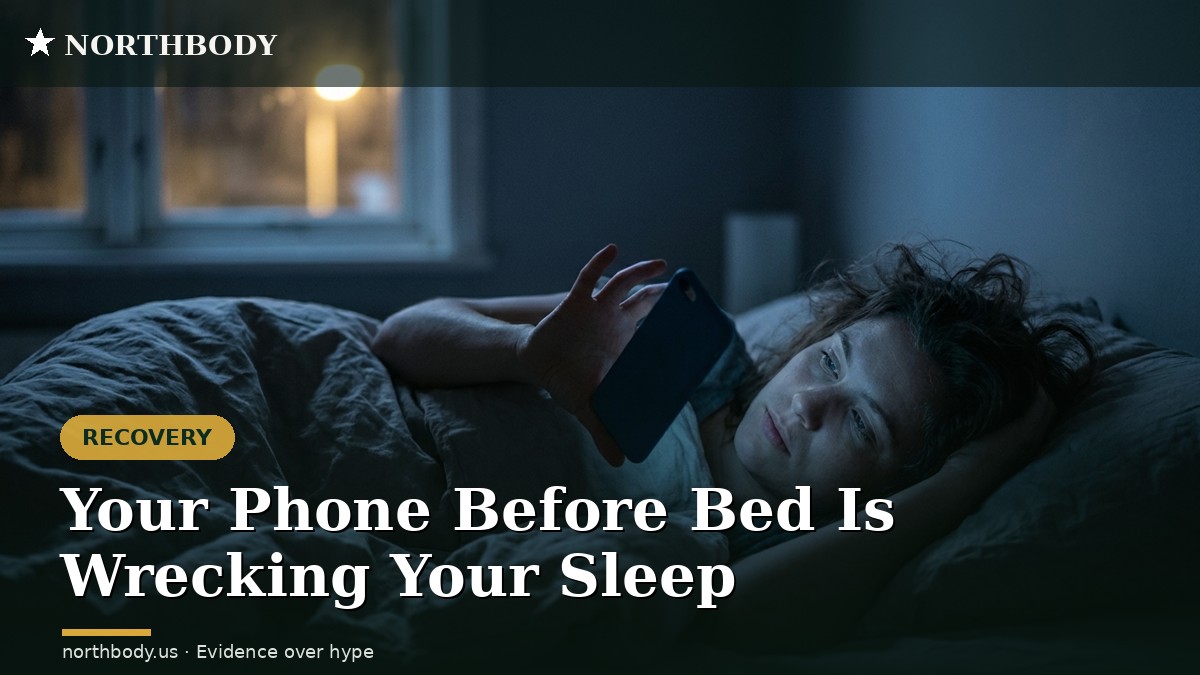
Your Phone Before Bed Is Wrecking Your Sleep
Scrolling in bed hurts your sleep in two ways: the bright screen light tells your brain to stay awake, and the engaging content keeps your mind alert. The result is that you fall asleep later and sleep less deeply — and you feel it the next day.
Almost everyone does it — “just five more minutes” of scrolling that turns into an hour. Understanding why it wrecks your sleep makes it much easier to change.
How it hurts your sleep
Two things happen: bright light (especially up close) signals daytime to your brain and delays the sleep hormone melatonin, while the engaging, stimulating content keeps your mind wired when it should be winding down.

The next-day cost
Less and lighter sleep shows up as tiredness, poor focus, low mood and stronger cravings the next day. Do it for weeks and the effects pile up.
How to fix it
The most effective move is simple: keep your phone out of the bed (ideally out of reach). Build a short wind-down without screens, and use a real alarm clock so your phone isn’t your bedside companion. Night mode helps a little, but the content and habit are the bigger problem.
A better night routine
- Charge your phone away from the bed
- Screens off 30–60 min before sleep
- Wind down with a book, stretch or calm music
- Use a real alarm clock, not your phone
- Keep the bedroom dark and cool
The bottom line
Your phone is one of the biggest hidden reasons your sleep suffers. A simple boundary — phone out of the bed — often improves your sleep within days. It’s one of the easiest wins in health.
Sources
- Sleep Foundation — screens, light and sleep.
- CDC — sleep and health.
- American Academy of Sleep Medicine.