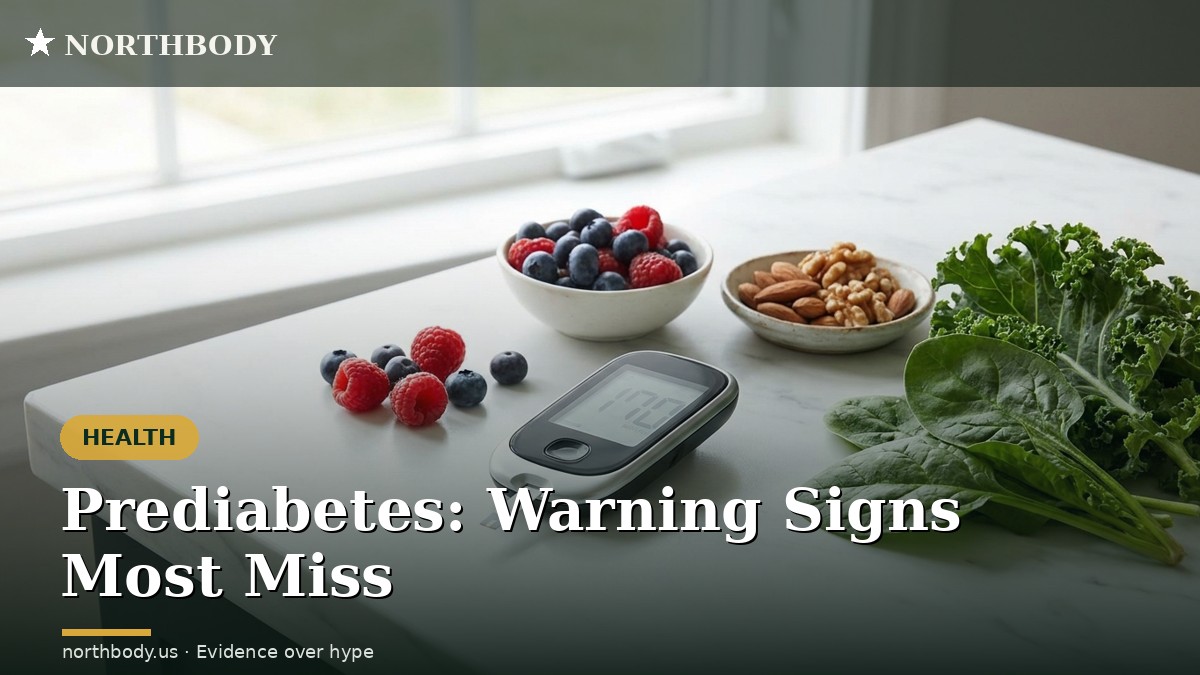
Prediabetes: The Warning Signs Most People Miss
Prediabetes means your blood sugar is higher than normal, but not yet high enough to be type 2 diabetes. It’s extremely common in the US, often has no obvious symptoms — and the good news is it can frequently be reversed or delayed with lifestyle changes.
Millions of adults have prediabetes and don’t know it, because it usually causes no clear symptoms. Catching it early matters, because this is the stage where change makes the biggest difference.
What prediabetes is
It’s an in-between stage: blood sugar is elevated, signalling that your body is struggling to manage glucose. Left unchecked, it often progresses to type 2 diabetes — but that path isn’t inevitable.

Signs and risk factors
There are often no symptoms, which is why testing matters. Risk is higher with a family history, carrying extra weight (especially around the middle), inactivity, and age. Some people notice increased thirst or tiredness, but many notice nothing.
How it’s often reversed
This is the hopeful part. Modest, steady changes — more movement, more fiber and whole foods, less sugary drinks and ultra-processed food, better sleep, and losing a small amount of weight if needed — can bring blood sugar back toward normal. Small wins add up.
Steps that genuinely help
- Get an A1C / blood-sugar test — you can’t manage what you don’t measure
- Move daily — even regular walks help a lot
- More fiber, fewer sugary drinks and ultra-processed foods
- Prioritise sleep — poor sleep worsens blood sugar
- Lose a small amount of weight if advised — even modest loss helps
The bottom line
Prediabetes is a warning light, not a dead end. Because it’s usually silent, testing is key — and because it’s often reversible, early, steady lifestyle changes can genuinely turn it around. Talk to your doctor about getting checked.
Sources
- CDC — prediabetes overview.
- American Diabetes Association — diagnosis and prevention.
- NIH — lifestyle change and type 2 diabetes prevention.