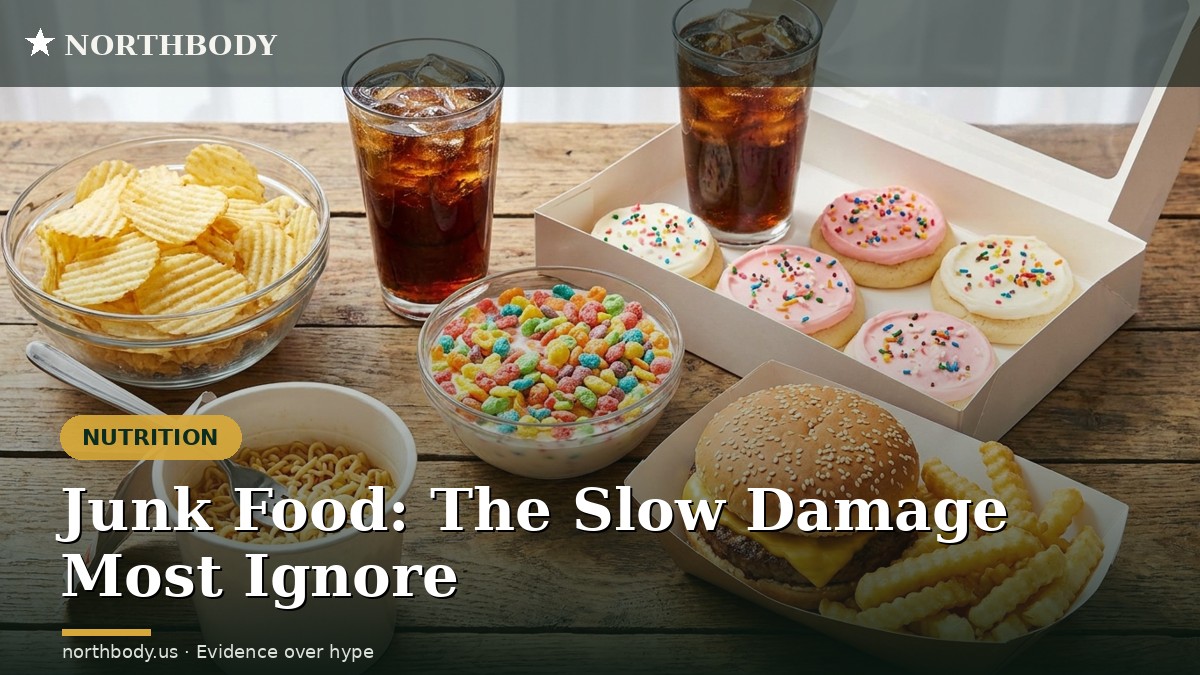
Ultra-Processed Food: The Slow Damage Most People Ignore
Ultra-processed foods — packaged snacks, sodas, instant meals — are engineered to be hard to stop eating, and diets high in them are linked to weight gain, heart disease and type 2 diabetes. The damage builds slowly and quietly, which is exactly what makes it easy to ignore.
You don’t need to fear every packaged food. But understanding what ultra-processed food does over years — and why it’s so easy to overeat — helps you make better everyday choices.
What “ultra-processed” means
These are industrial food products built from refined ingredients, additives and flavourings — think chips, sodas, packaged sweets, instant noodles and many ready meals. They’re cheap, convenient and designed to taste irresistible.
What it does over time
Diets high in ultra-processed food are consistently linked to weight gain, heart disease, type 2 diabetes and other problems. No single packet is the issue — it’s the steady, daily build-up that quietly raises your risk.
Why it’s so easy to overeat
These foods are engineered to be hyper-palatable — the perfect mix of salt, sugar, fat and texture that overrides your natural “I’m full” signals. It’s not weak willpower; it’s product design.
Simple swaps that help
- Cook a little more at home — even simple meals
- Swap sugary drinks for water or unsweetened drinks
- Keep whole-food snacks (fruit, nuts, yogurt) handy
- Read labels — long additive lists are a clue
- Aim for “mostly,” not perfect
The bottom line
You don’t need to eliminate every packaged food — but cutting back on ultra-processed food, and cooking more whole food, is one of the highest-impact things you can do for your long-term health.
Sources
- NIH — ultra-processed foods and health.
- BMJ — reviews on UPF and disease risk.
- WHO — diet and chronic disease.